
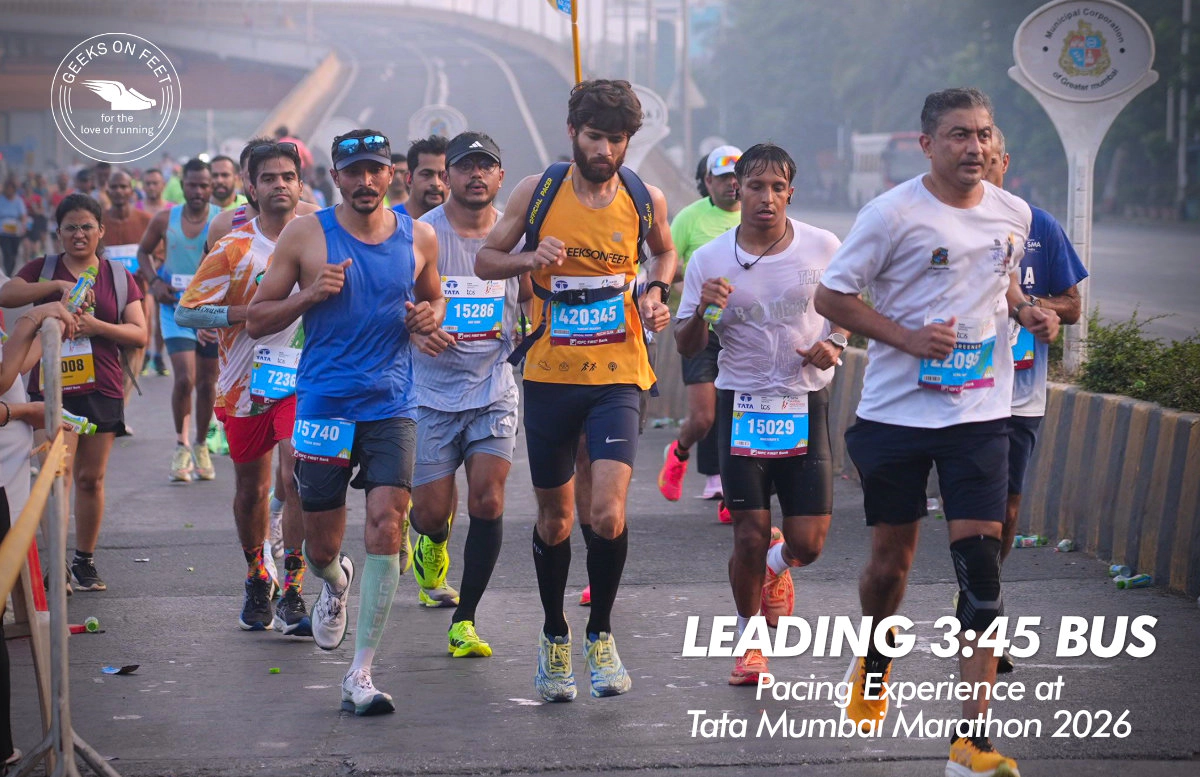
This article is a personal account of my pacing experience at the Tata Mumbai Marathon 2026. Since this is not a race report, I have skipped details about my own training and mid-race hydration/nutrition.
I had not raced hard after Sydney Marathon in August 2025 since I wanted a break. The thought of being back to racing at TMM was tempting, but at the same time I wanted to race a marathon in my home city of Delhi. As fate would have it, I got a chance to pace a bus at the TMM - a perfect long run in the buildup to Delhi (which is 5 weeks after). TMM was also my first marathon in 2024 where I blew up mid-race in spectacular fashion (first half 1:27, second 1:59). Hence, it felt like a full circle to have the chance to help others run a better race than I did, and make my pacing debut at the same place as my marathon debut.
The next question was the choice of pace bus. I felt comfortable with anything slower than 3:15, since that gave me plenty of buffer to handle any unknowns. The 3:45 bus seemed too slow at first, and I wondered if there was a risk of me going too fast - but that is the mental challenge of pacing. Most of my training runs are between 5:10-5:30 pace, so a 5:20 pace over the marathon distance would not have been a problem. So I went ahead with the 3:45 bus.
The pacers were announced about 2 weeks before the race, and the WhatsApp groups were in place a couple of days after that. I did not know what to expect, but it was a surprise for me to see 750ish people join the group. That was when I realised that things were serious, and I started working on a pace plan based on the 2025 route preview posted on GeeksOnFeet. I came up with one by 6th January and shared it with the runners, and posted it on the GeeksOnFeet website.
However, a curveball was thrown one week before the race with media outlets reporting that the route would change to include the new Coastal Road both north and southbound. A mass frenzy followed, both on WhatsApp and across the general run-fluener community. All sorts of analyses were being performed to assess the impact of this change, with some believing that the race had just got tougher manifold. Luckily, a runner from the pace bus group drove through both the merge points with the Coastal Road and the video evidence was enough for me to disregard the elevation changes. It is a very gentle and short climb, and I believe that anyone capable of a 3:45 marathon should be able to push through.
There was still confusion about where exactly these climbs would come, for example, I was very unsure if Peddar would be split across 35th and 36th km or stay in 36th. I created my pace plan with a certain degree of uncertainty accounted for, and let the group know that it is possible we might slow down (+-)500 meters from the original plan. More data and route gpx files came later, but I stuck to the plan to avoid too many changes. One day before the race, I re-iterated the “looseness” of the planned splits and that we would react to route as needed. As long as each of the first 3 10 kilometers were done in roughly 53 mins each, all was good. Beyond that, we’d slow down for Peddar and have some buffer for the humidity at Marine Drive - meaning we’d be running a positive split (but roughly the same relative effort throughout). I also made it clear that we would be helping each other at the hydration points and run as a team for the bulk of the race.
I had initially kept the WhatsApp group open, but it quickly went south. I kept it locked and posted relevant updates, while asking anybody seeking advice to directly message me. It kept the group sharp and reduced notification clutter. I did not know that questions about people wanting to catch me from another wave, and about “what time do you think I can run this in” would be so common. The next time it would be sensible to add the answers to these in the pace bus info page itself.
I had no plans to taper before the race except on the days I’d travel, but I found out at the last minute that my Vaporflies were missing and my only option was a beaten up pair of Asics Noosa. As a result, I had to take a 3 day running break before the race to prepare for the beating my feet were about to receive.
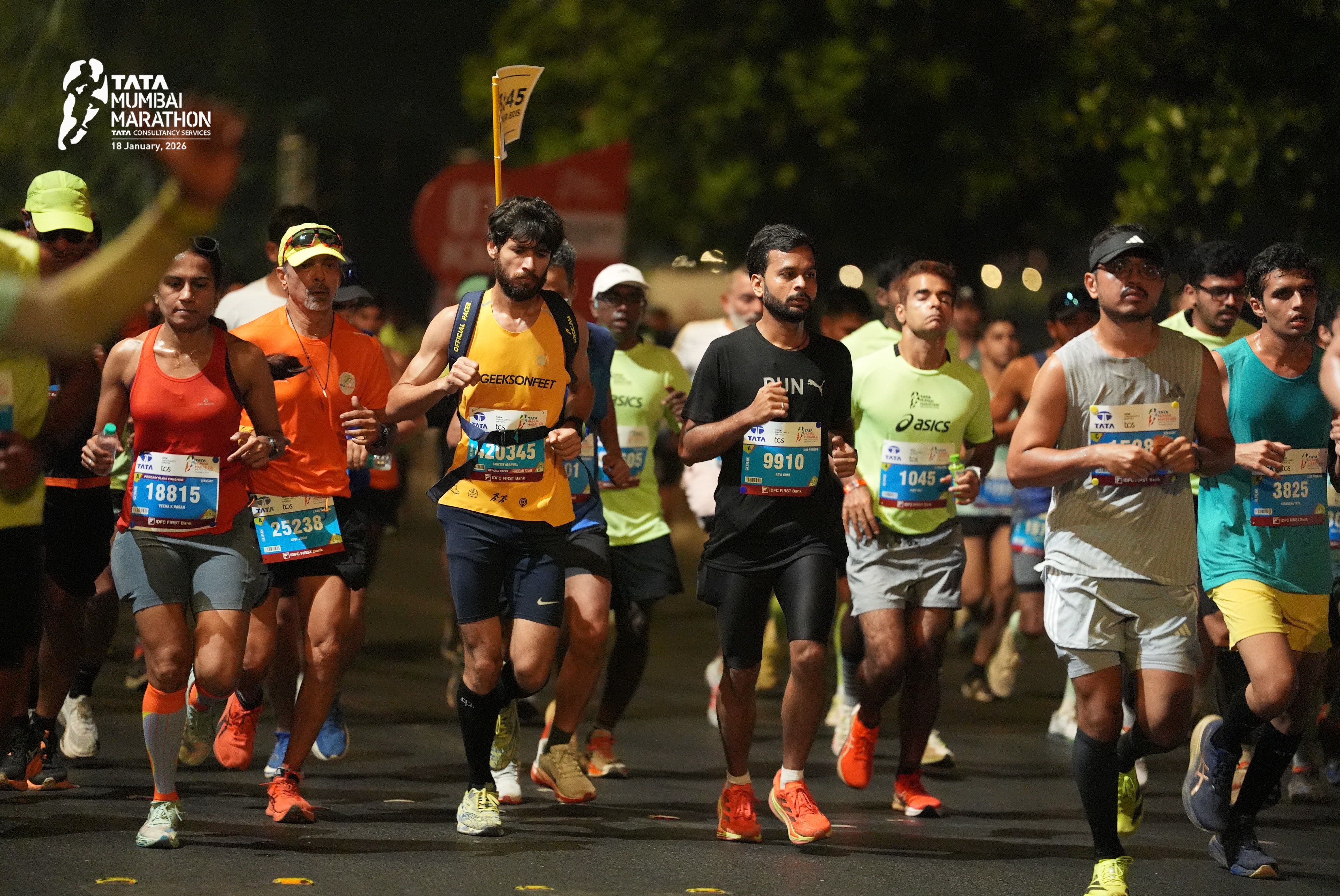
Holding area and Start – Due to delayed service on the Aqua Line, I reached the holding area just 20 minutes before the start, which was not ideal. To let the busmates know, I posted a message on the WhatsApp group and kept the pace flag high in my hand to attract as much attention as I could. By the time we started, I believe I had a few hundred people with me. Credit to Procam as well for acting on feedback and managing the waves smoothly.
Pre Coastal Road – The initial few kilometers were crowded, and we missed the target pace of 05:15 per km by quite some margin. Luckily, it got much better by the time we reached Marine Drive and we slowly started to get into a rhythm. In the initial few kilometers I did not interact much with the bus, since it was constantly getting churned. The only instructions I gave were about hydration points, bumps in the road and turns, since they were hard to spot in the night with such a big bus. I talked to a few runners as well who initiated conversation themselves, but I advised them to save their breath. Around the 5th km, somebody tried cross cutting me and I nearly tripped due to their heel clicking my shoe. I had a narrow escape, and that made me think if I should have thought of stronger contingency plans.
We reached the 10km mark in 53:21 - just 21 seconds off plan. By that time, I could see that people genuinely going for 3:45 or quicker remained. That was when I gave any kind of advice/motivation to the group for the first time (“warmup is over”). Spirits were high and I asked the group to push through the Haji Ali climb without a significant drop in pace. The group responded very strongly and we cruised through towards the Coastal Road.
Sea Link – We stuck to the plan and cruised at a roughly fixed pace on the gentle incline towards the sea link. By this time, the kilometer markers started to drift more and more - with the 16th km marker coming at 16.3km as per GPS. This worried me a bit as I had accounted for about 500m extra in the worst case, but this would have easily gone past 600m by the end. I kept my communication clear with the bus about the markers, and that we might need to speed up a bit later on. Sadly, this was when a few people started to lag behind the bus as well and the overall number in my vicinity dropped to about 60.
Till Peddar Road - We arrived at the official 20km mark in 01:46:36, which meant that the second 10k was done in 53:15 and we were 36 seconds behind the plan. In my opinion the stretch between 20-30km is key to a good TMM since it is mostly flat and downhill. I was extremely happy that most of the group responded well to this and we covered the third 10k in 51:52. At this point, we managed to gain 32 seconds over the original plan. I told the bus that if their legs were not hurting at that stage then they were doing something wrong - a fun but timely thing to say.
By now the sun had come out and it was time to climb the Coastal Road once more. This was an incredibly docile climb as compared to the last one, but a few runners could not keep up the pace here because of the rising humidity and lack of hydration stations in the stretch up to Peddar. I was surprised to hear how many people cramped at the 32km mark - a good reminder that salt tablets are an important tool in the arsenal in a humid race. I decided to slow down a bit just before Peddar to let everyone catch their breath.
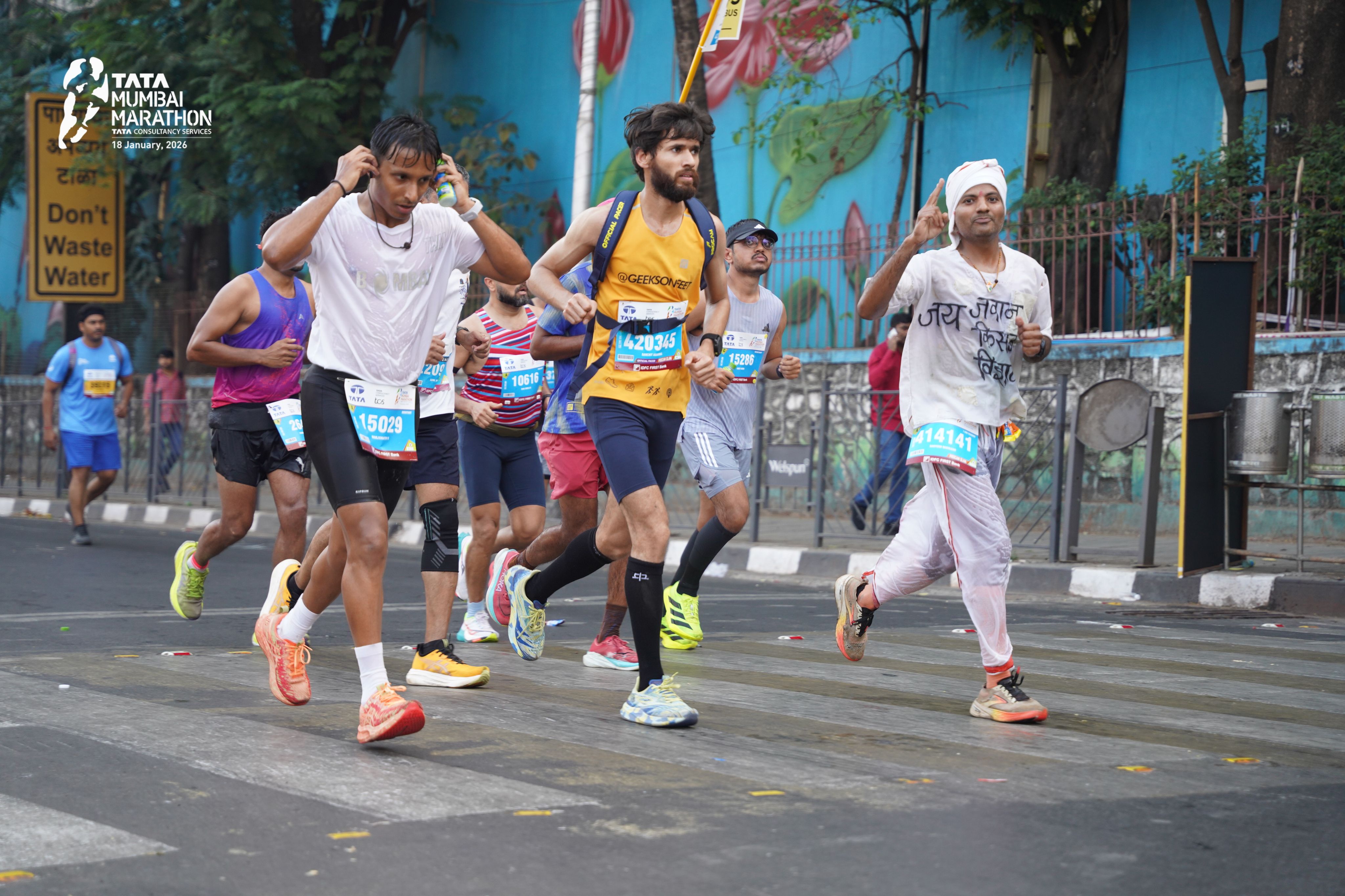
The Peddar Road Climb – Peddar road provides the race a unique identity. Even though it is a semi-steep climb at best and gets over pretty quickly, but because the sun is out and it comes so late in the race, a lot of people struggle there. I focussed on two things - to make sure that everyone’s mind was off the pain of the climb, and to avoid burnout as much as possible so that people can go for a faster finish. I ran a fair bit of the uphill backwards to shout at the bus to keep going. The generous crowd support also helped a lot. It was very heartening to see the other runners keep the tempo up as well with their chants. Sadly, about 10 people dropped off from the bus during the course of the climb, and I could see about 40 people in my vicinity after the climb was done.
The final stretch – When the Peddar downhill began, I advised the remaining bus members to leave the bus behind if they felt good. That left me with roughly 15 people running close. I had initially not thought about the fact that at this point I would start seeing faster runners who were struggling to keep the pace going. When I saw any such runner, I made sure to convince them to join the bus for the final stretch. Even if they didn’t, I hope the random words of encouragement made some difference. The crowd at Marine Drive was lovely as always, and I asked the faithfuls who had stuck with me for 41km to go for a fast finish. That left me nearly alone when the final left turn towards the finish came. I crossed the finish line 5 seconds before 3:45, which was maybe a bit too close. Only regret here was that I had to run the last 100m a bit faster to cover the gap between GPS readings and actual distance (360m by the end).
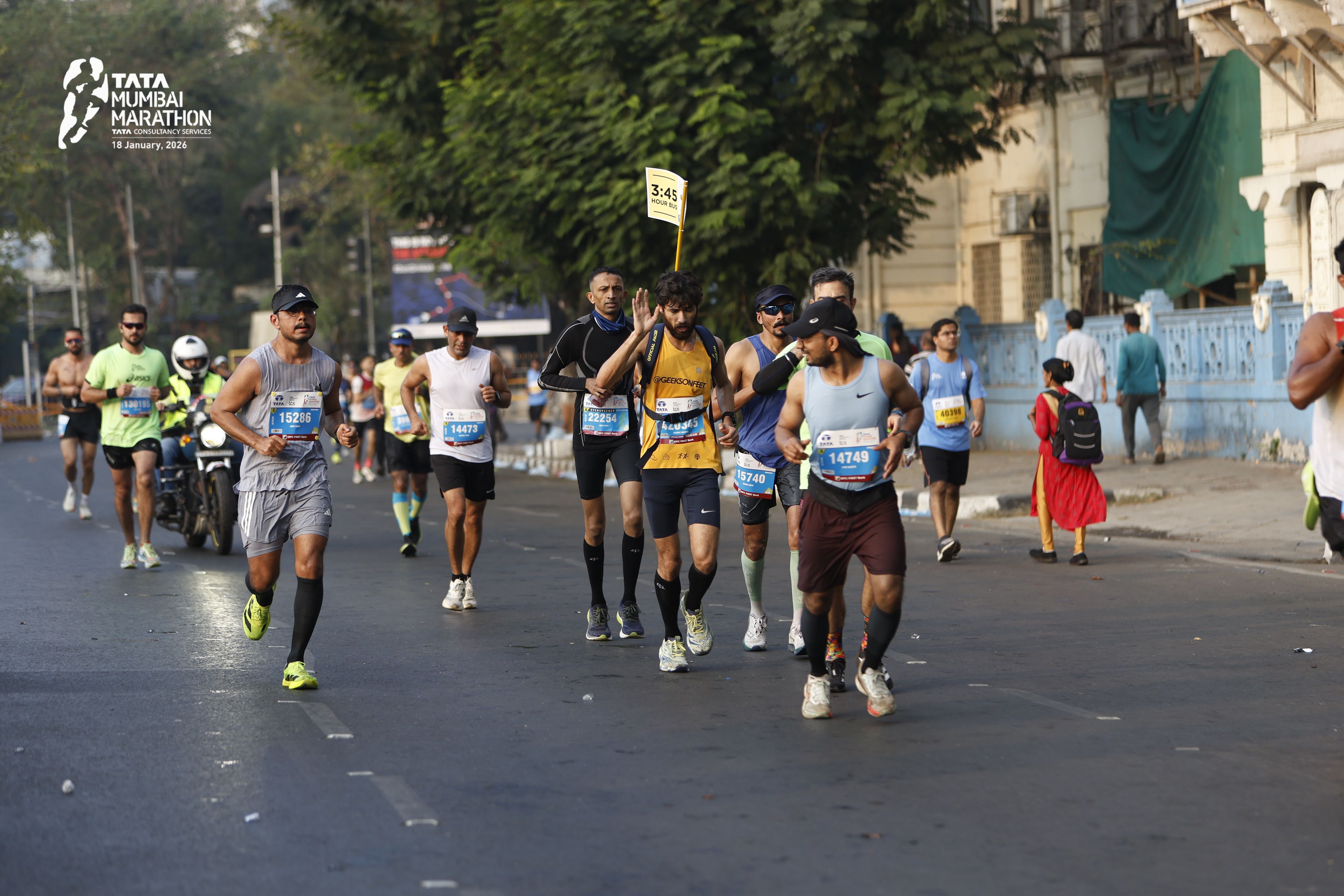
I have learnt that pacing is a very precise job which demands a lot of commitment. It also helps to be sharp with dividing 100 by any number between 1 and 60 to estimate lap pace. It was heartening to interact with the group during and after the race, and I am happy that I could help some of them achieve their goals. People spend a lot of time and money for marquee events like TMM, and it is a pacer’s moral obligation to justify these investments.
New Delhi Marathon is next on my calendar, but as a racer. I am sure I will pace again and when that time comes, I will look forward to you joining my bus.
I am once again thankful to Vijayaraghavan for his writeup about his 2024 TMM pacing experience, and my article’s structure draws heavily from it. I would also like to thank my friend and co-founder of GeeksOnFeet, Aravind, for his constant support over the years.
Sanchit is a software engineer who started running as a hobby and got addicted. If he’s not running, he’s probably thinking about his next run or surfing Strava. He can be reached out to on Twitter @sanchit3008 or on Strava at this URL.