
Nike Zoom Fly 6
The bridge between everyday training and carbon‑plated race days
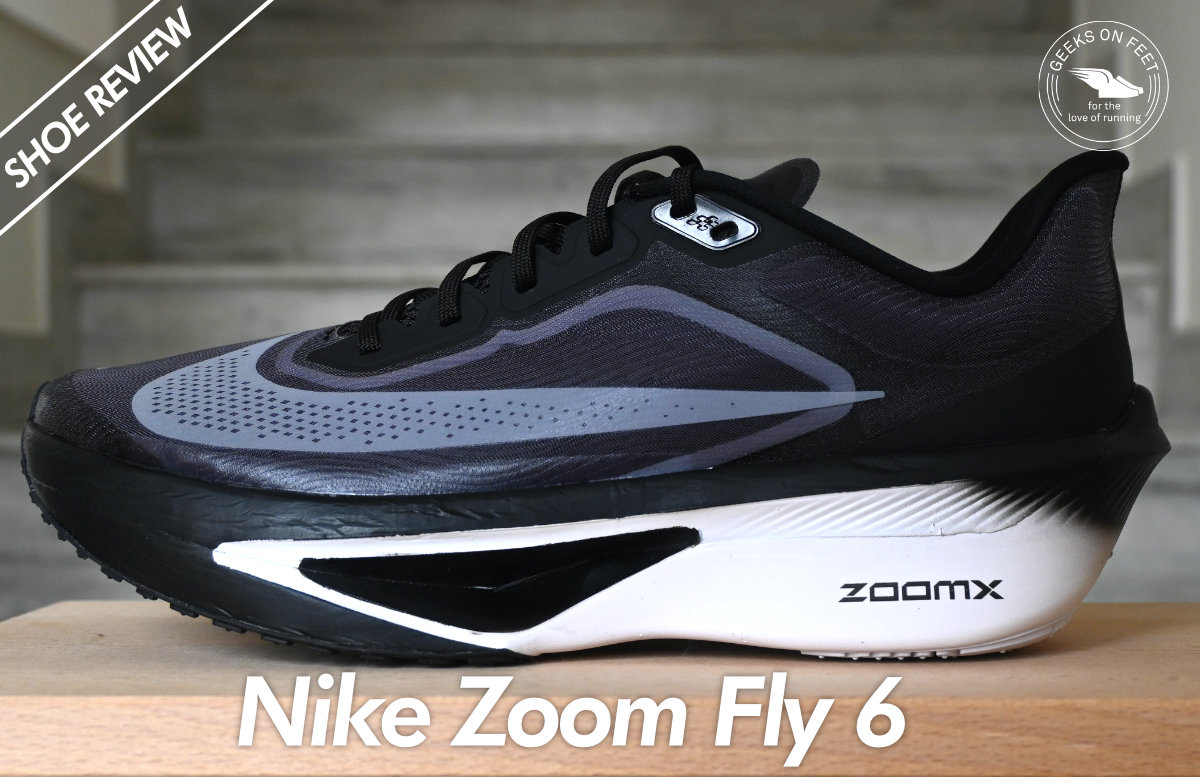
The Zoom Fly series has come a long way since its debut in 2017 with the original nylon-plated Zoom Fly v1 with Lunarlon foam. That first edition was my introduction to plated shoes, and I ended up owning two pairs, including the FlyKnit version, which remains my favorite Zoom Fly to date. Over the years, the Zoom Fly has carved its place as the OG super trainer, bridging the gap between daily trainers and carbon-plated racers.
The Zoom Fly line-up however lost its way as super trainers evolved. The continued use of React foam didn’t help. Zoom Fly 5 switched to recycled ZoomX core encased in SR-02 EVA foam. That didn’t change much for the line-up. With Zoom Fly 6, Nike has switched to Zoom X foam for the first time. At first glance, you might mistake it for an Alphafly, the aggressive midsole geometry and cutouts give it that vibe. But it’s a completely different shoe underfoot.
What makes up Nike Zoom Fly 6?
Under the hood, the Zoom Fly 6 packs a full-length carbon fiber plate sandwiched between a 40mm stack of dual-layered foam. There’s a mild rocker built in and a tapered heel bevel that looks very similar to AF3’s, designed to promote smoother transitions, especially for heel and midfoot strikers. The shoes weigh about 290g (for UK 10) which is 15g lighter than the previous edition. It is now roughly the same weight as the Puma Deviate Nitro 3. Heel to toe drop of 8mm remains the same as the previous edition, making it suitable for runners of all foot-strike types.
Midsole
The dual layered midsole has ZoomX foam on the top and SR-02 Eva foam on the bottom. Both foams have the same softness and reads at 25 HA on the durometer scale. For reference, that’s significantly softer than the Alphafly 3, which measures around 35 HA. However, the two layers of the foam differ in characteristics, and SR-02 Eva foam is supposed to be much more durable.
Upper
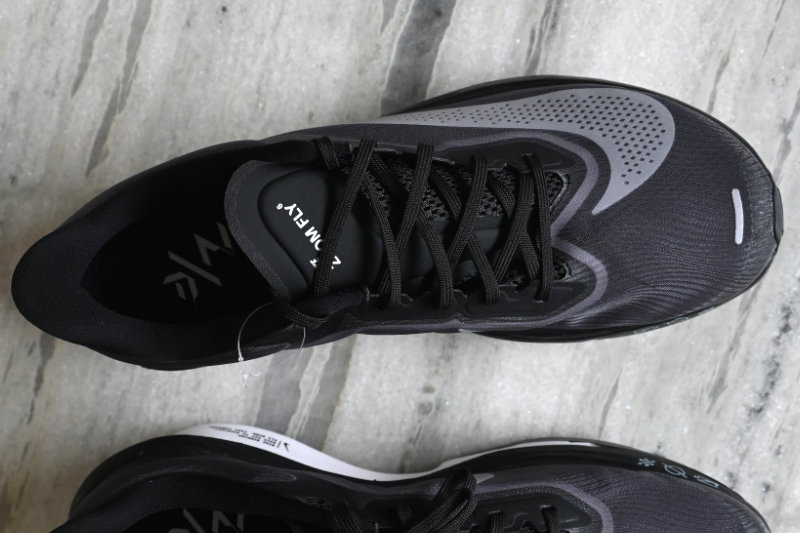
Nike went for a layered construction here: a thin, transparent mesh overlay (very similar to vaporweave) on top of engineered mesh. It keeps its shape well and gives the shoe a unique character visually. Breathability, however, isn’t its strong suit, especially in humid conditions.
Heel
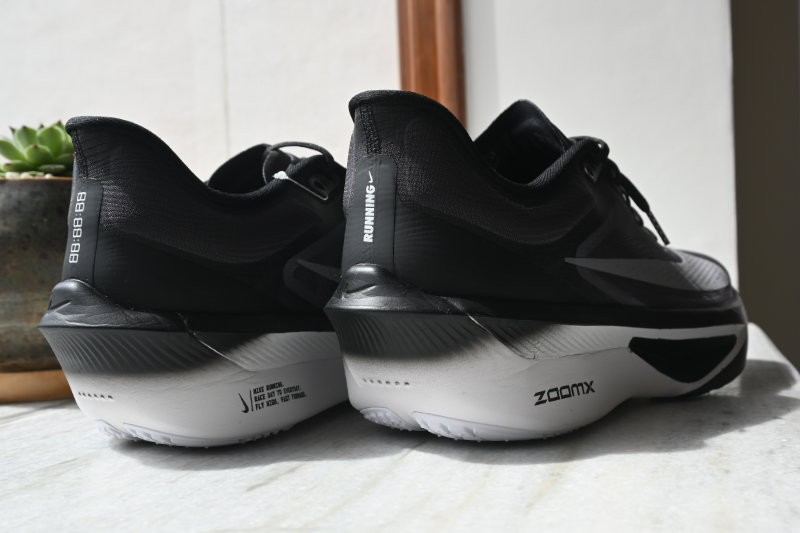
The heel is well-padded and supportive. The firm heel cup adds to the stability. Combined with the tapered bevel, it creates a very forgiving landing platform, particularly for heel strikers. The lockdown is secure without feeling overbuilt.
Outsole
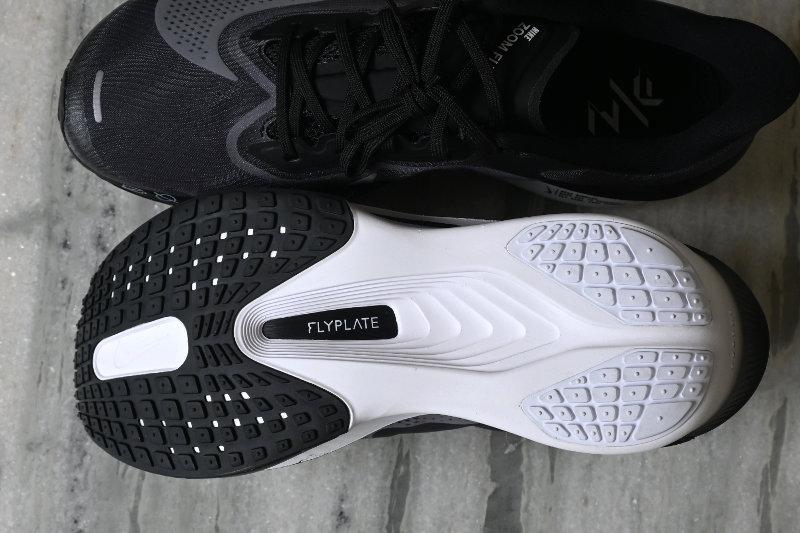
One of the most aesthetic outsole designs I’ve seen on a Nike shoe so far. The rubber coverage is generous in the forefoot and the heel, and feels durable. Even after 200km, there’s barely a scratch.
Why did I consider this shoe?
I was also looking for a fast-yet-comfortable threshold shoe to rotate with my Puma Deviate Nitro 3. A friend was travelling to Tokyo, and the price there was almost 4000 rupees cheaper. So the timing was perfect.
Ride In Zoom Fly 6
Step-in comfort is excellent, and the shoe immediately feels plush underfoot. The combination of a 40mm ZoomX stack and the carbon plate delivers a distinctly cushioned ride. It’s soft – maybe too soft for my taste. At walking pace, it feels almost squishy, and at moderate paces, it lacks the snappy response you’d expect from a plated trainer.
The first few runs, however, left me conflicted. At easy to moderate paces, the ride feels a bit dull – the softness mutes any sense of snap. It’s only when you push into faster efforts, particularly around marathon pace and faster, that the Zoom Fly 6 comes alive. The plate and rocker work better at those speeds, making it feel efficient and smooth.
Many of my running mates swear by the Zoom Fly 6 for its versatility, but personally, I find it more of a niche shoe for dedicated tempo and long marathon paced runs rather than a do-it-all trainer.
Fit & Comfort
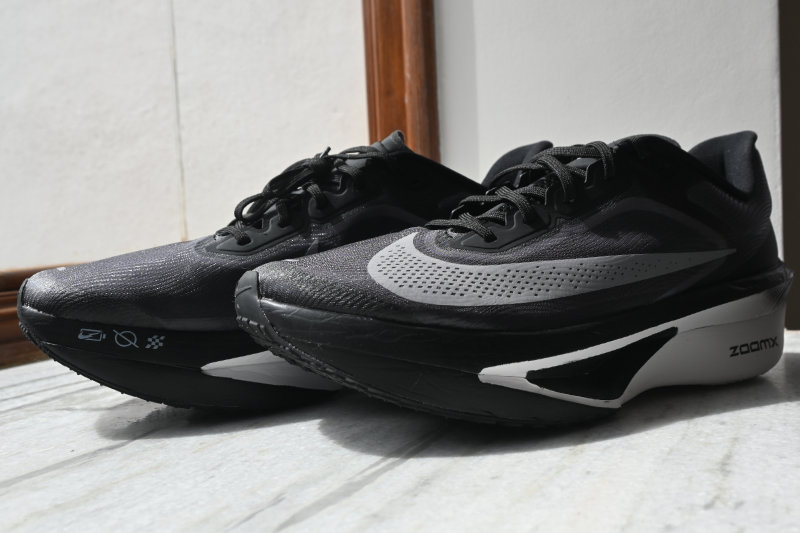
After logging 200km, the comfort remains a highlight. The padding around the heel and collar makes it easy to wear for long runs. The midfoot fit is dialed in perfectly, while the toe box is surprisingly roomy. That’s great for comfort but may not be ideal for racing, where a snugger fit is preferable.
Breathability is the only downside. On humid days, the upper runs warm, and the dual-layer mesh doesn’t vent as well as some other tempo trainers.
Stability
Despite the towering 40mm stack, the Zoom Fly 6 is impressively stable. The wide base, padded and firm heel, and a stiff carbon plate help keep it controlled through corners and uneven patches, which isn’t always the case with supershoes.
Road Grip
The outsole delivers dependable traction, even on sandy or slightly dusty roads. Bengaluru roads are full of fine sand, the dried mud after the rains. Wet performance hasn’t been an issue so far, though I haven’t tested it extensively in heavy rain.
Durability
The outsole is holding up exceptionally well with minimal wear after 200km. The midsole shows some early compression, which is typical for ZoomX at this softness level, but it hasn’t impacted ride quality yet. I’d estimate 600–800km of life, depending on runner weight and usage.
Aesthetics
The outsole is holding up exceptionally well with minimal wear after 200km. The midsole shows some early compression, which is typical for ZoomX at this softness level, but it hasn’t impacted ride quality yet. I’d estimate 600–800km of life, depending on runner weight and usage.
Review Summary
Detailed Scores

Aravind is a techie, running geek, and a marathoner. He is a CrossFit Level 1 Trainer. He loves all things technology and technology in running, with special interest in running form analysis.