
Vishwas runs 2:57:36 at the TCS New York City Marathon 2026 — his 10th sub-3 marathon and his first sub-3 finish at a World Marathon Major.

Before the NYC marathon, I had already completed nine sub-3 marathons. However, achieving a sub-3 finish at a World Marathon Major had remained an unfinished goal.
I came close at the Boston Marathon in 2022, finishing in 3:02, and even closer in 2023, when I clocked 3:00:25 just 25 seconds short of my target. At the Chicago Marathon in 2024, I finished in 3:03. A minor niggle just two weeks before the race day at London Marathon, affected my preparation, and I finished in 3:05.
New York was another opportunity to achieve that long-awaited goal. This time, I managed to get it right, finishing in 2:57:36.
My preparation for New York was built around a consistent training routine, that involved 80 and 100 km every week, with six running sessions and three strength sessions.
Some key highlights of the training block were:
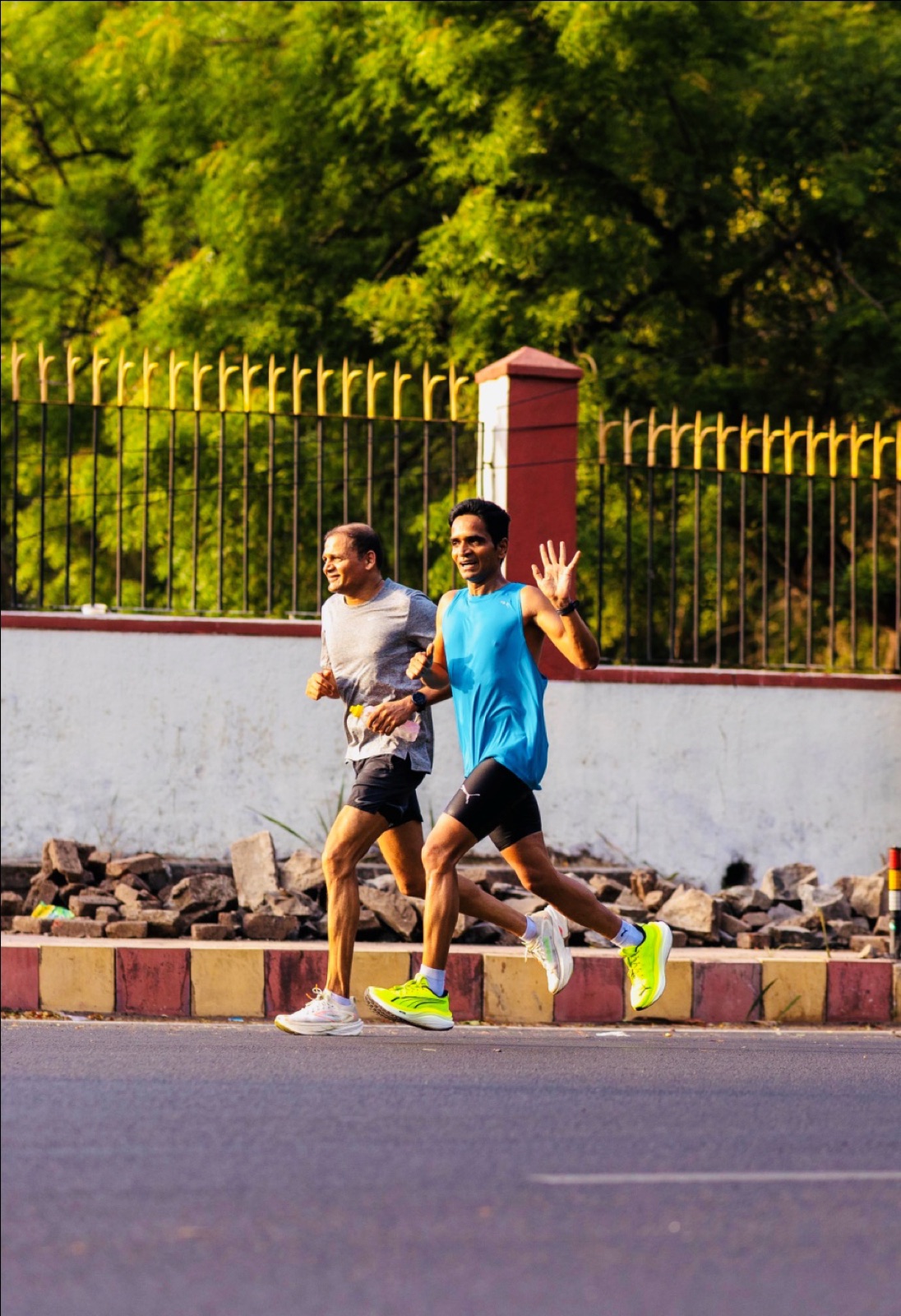
A training run during the New York build-up.
The final 40 days were particularly important. The focus shifted more towards speed and speed endurance.
Nutrition also played an important role. Carbohydrates became a major part of my diet. Sweet potatoes became a regular feature in my meals.
I arrived in New York on Thursday, 29 October, around 3 p.m. I checked into the hotel and headed straight to the marathon expo to collect my bib.
I deliberately spent some time walking around the expo instead of going straight back to the hotel. I wanted to stay active and help my body adjust to the time difference.
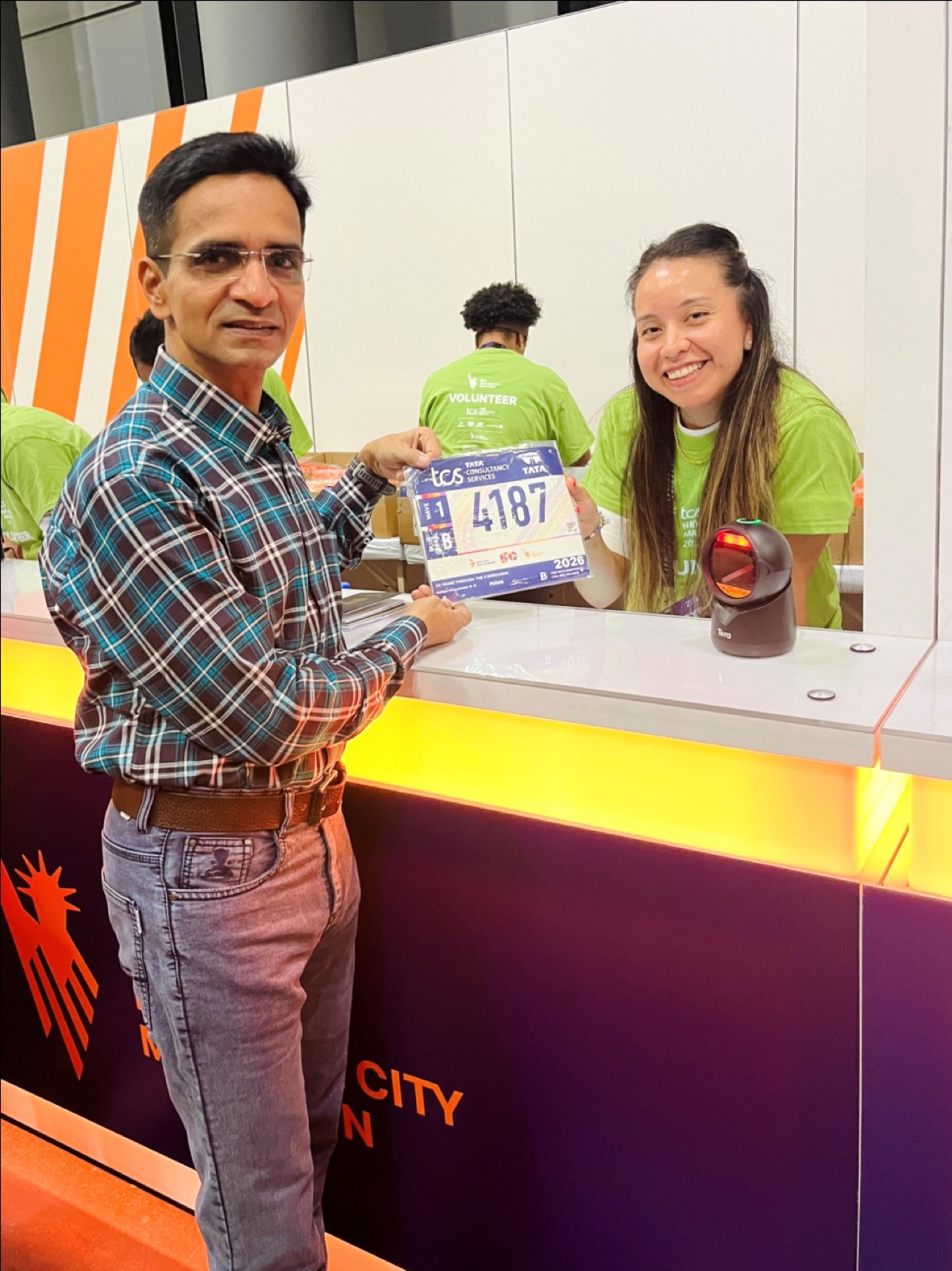
Bib 4187
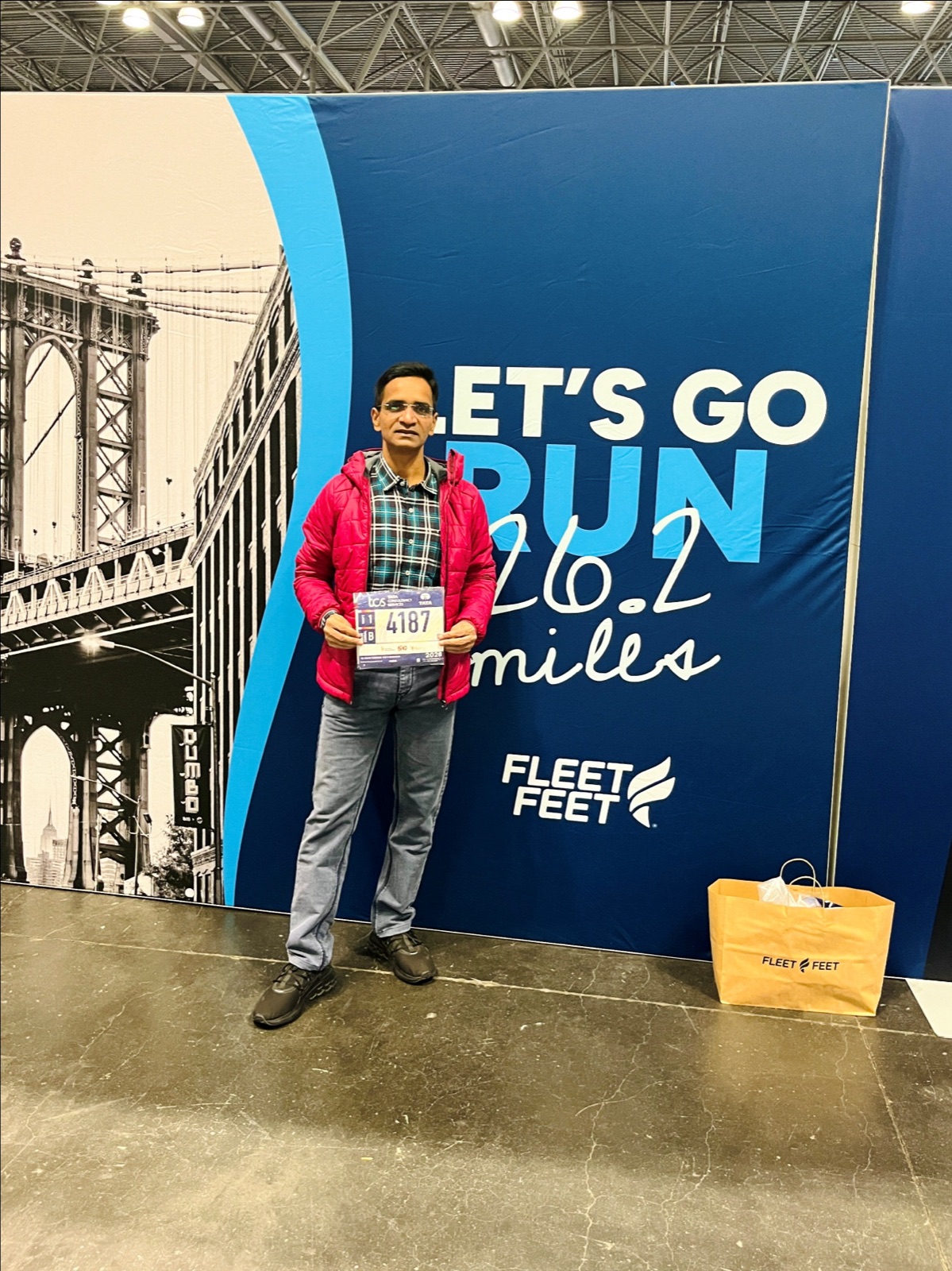
At the expo.
Friday was relatively relaxed, with a short shakeout run around the hotel and Central Park. Saturday included another short run with a few strides at Central Park, followed by the 5K Dash.
Saturday was mainly about carbohydrate loading, hydration, rest and getting everything ready for race day. I had an early dinner and prepared my race kit before going to bed.
Interestingly, daylight saving time ended the night before the race day. So the clocks moved back by an hour. I was expecting an extra hour of sleep, but the excitement of race day meant I woke up quite early.
I had black coffee, a banana and sweet potato for breakfast.
I left the hotel around 4:50 a.m. and took a cab to the ferry terminal. From there, it was a 40-minute ferry journey followed by a bus ride to the start.
I reached the start area around 7 a.m. It was extremely cold. The organizers had arranged coffee and doughnuts and I had a couple of coffees while waiting.
I stayed wrapped in a thick sheet to keep myself warm. Around 8:30–8:45 a.m., I removed the extra layers, completed my warm-up and moved towards my starting corral.
I was in Wave 1, Coral B. I crossed the start line at approximately 9:11 a.m.
Just before the start, I had a Five Star chocolate and Fast&Up Reload.
After all the preparation, the waiting was finally over. It was time to run.
The course features five major bridge crossings, Trying to maintain an identical pace throughout would not be the right strategy.
So decided to target a slightly positive split:
The idea was to manage the early climbs, conserve energy and stay strong during the second half.
My fueling strategy was to carry five GU Roctane gels and also take advantage of the Maurten gel available at the on-course gel station.
The race started at Fort Wadsworth on Staten Island. The opening stretch took us onto the Verrazzano-Narrows Bridge, one of the most iconic parts of the New York Marathon.
The bridge is a significant climb, and I knew there was no point in forcing the pace so early in the race. I focused on staying relaxed, controlling my effort and getting into the rhythm of the marathon.
Once across the bridge, the route descended into Brooklyn. The next couple of kilometres were faster, and by kilometre four, I had started settling into a comfortable rhythm.
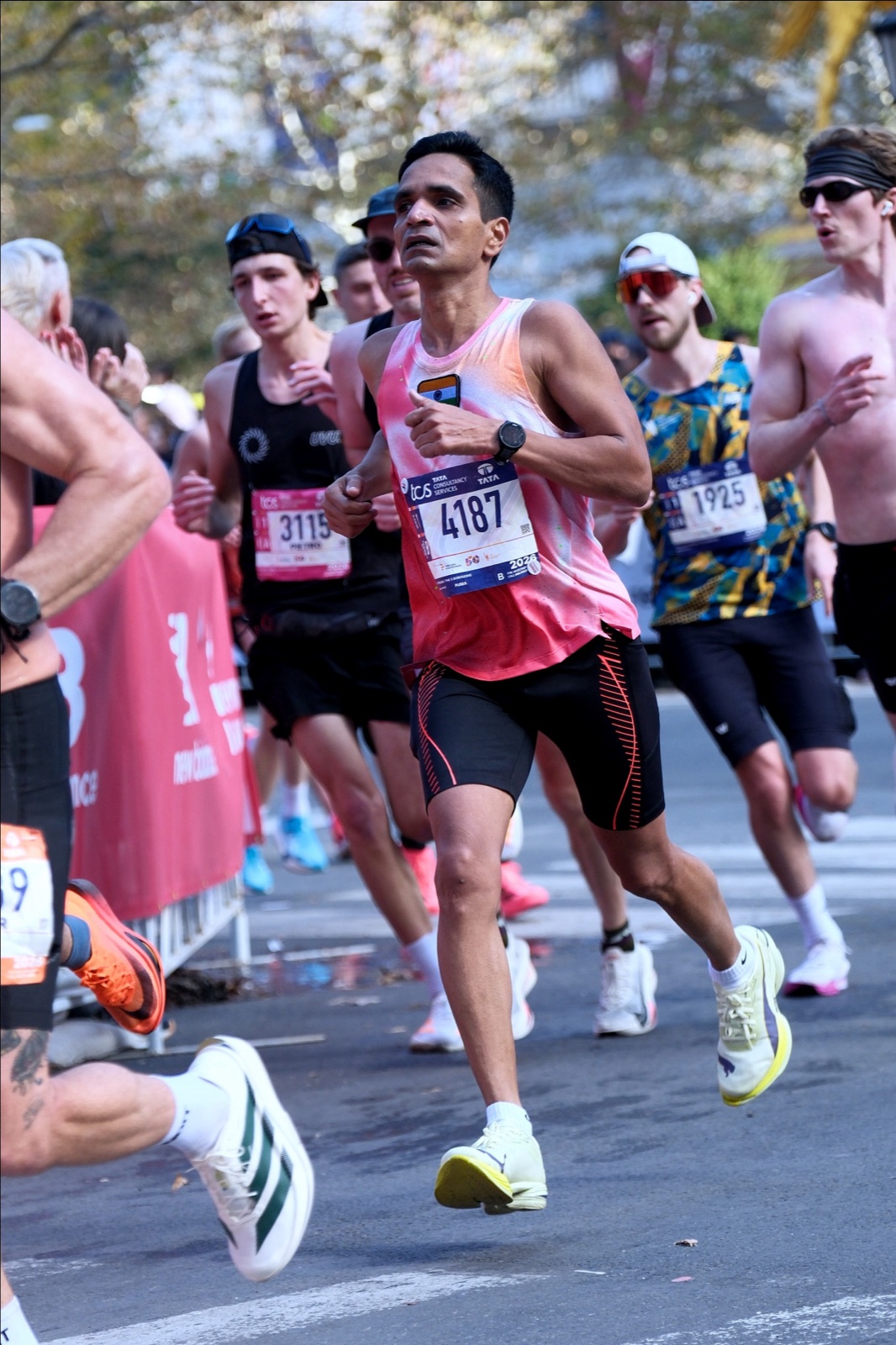
Settling into rhythm in the pack.
Brooklyn is a long stretch of the course, taking runners through several neighborhoods and lively streets. The crowds, music and cheering made this section enjoyable.
The course continued to roll, with gradual climbs and descents. Hardly any stretches where I could settle into rhythm.
I focused on running by effort. The 5 km splits written on my hand were of great help.
As we approached the Pulaski Bridge, we moved from Brooklyn into Queens. This crossing came close to the halfway point of the marathon.
I crossed the halfway mark in 1:27:18, slightly ahead of my planned first-half target.
I was feeling comfortable, but I knew the second half would be more demanding. The plan was to remain patient, and maintain my effort.
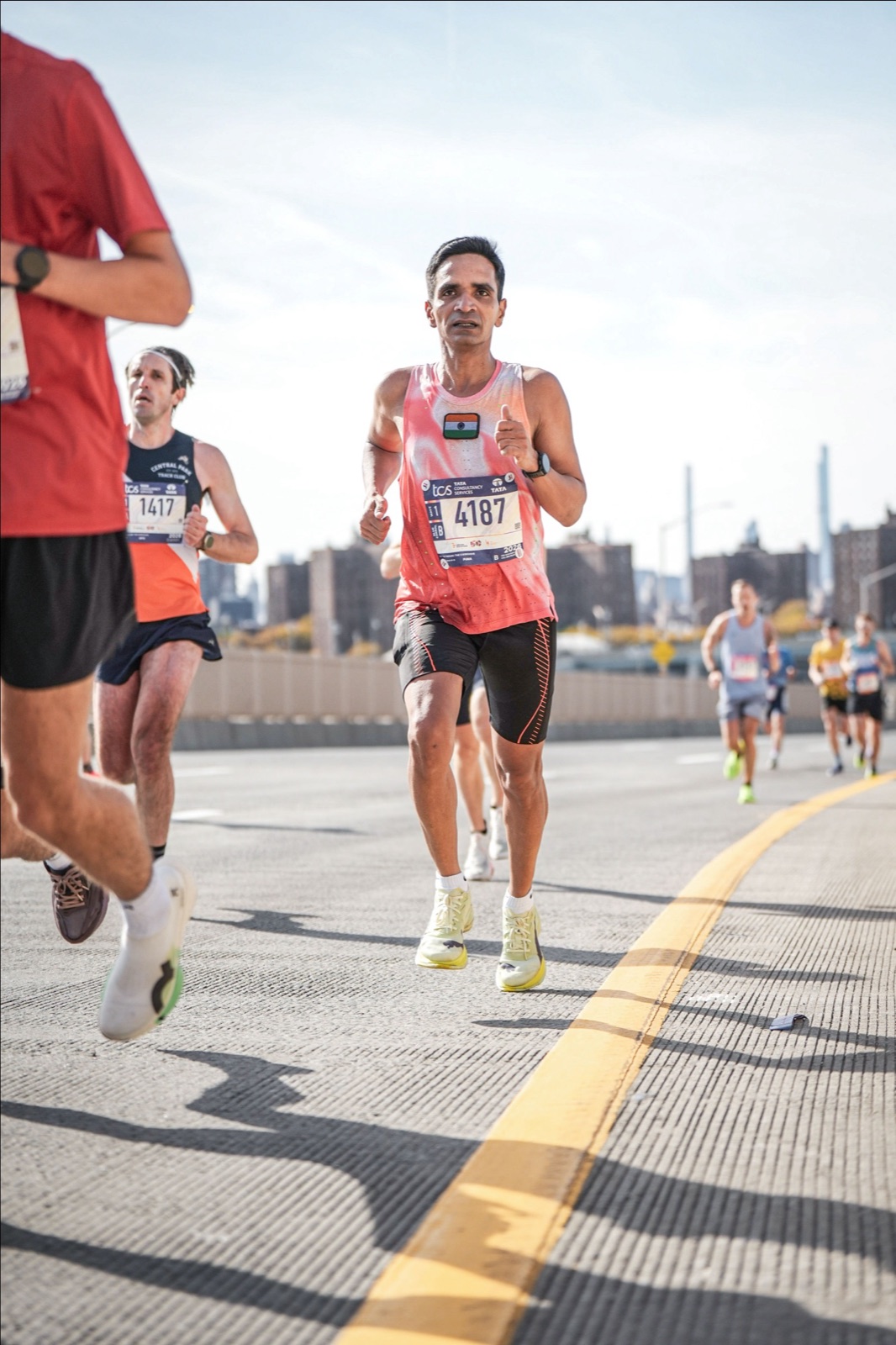
On one of the five bridge crossings.
After a relatively short stretch through Queens, the course reached the Queensboro Bridge, which connects Queens to Manhattan.
This is one of the most memorable and challenging sections of the race. It is a long bridge crossing. The atmosphere also feels different here, with the bridge section offering a quieter stretch before runners descend into Manhattan.
Coming off the bridge, runners reach First Avenue, where the crowd support becomes incredible. The energy from spectators along First Avenue is something that makes the New York Marathon so special.
I continued to focus on my pace and effort, knowing that there was still a long way to go.
The route continued north along First Avenue before taking us over the Willis Avenue Bridge into the Bronx.
By this stage, the kilometres were beginning to add up, and the repeated climbs were starting to test my legs.
After the short stretch through the Bronx, we crossed the Madison Avenue Bridge back into Manhattan.
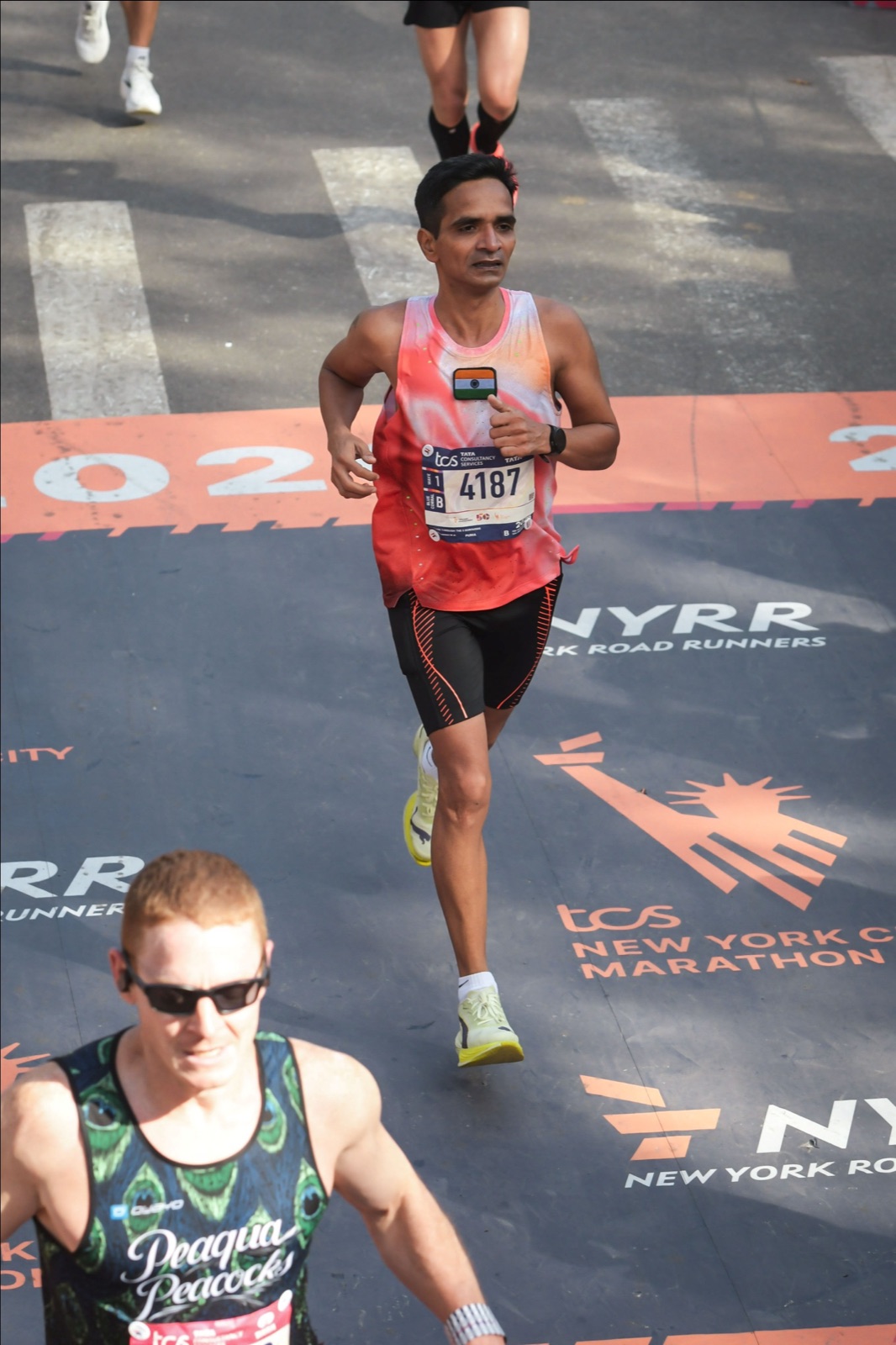
Bib 4187 on course.
At 30 km, I was around 2:03 into the race. I calculated that I had approximately 57 minutes to cover the remaining distance for my target.
At 34 km, I was around 2:20. I knew I was still in a good position, but I also understood that the toughest part of the marathon is still ahead of me. One thing I noticed was that my Garmin was showing approximately 300 metres more than the official course markers. I therefore relied more on the official markers. Around the 38 km mark, another climb slowed me down significantly. My pace dropped to approximately 4:40 per kilometre. I reminded myself that I had trained for this moment and that I needed to keep pushing..
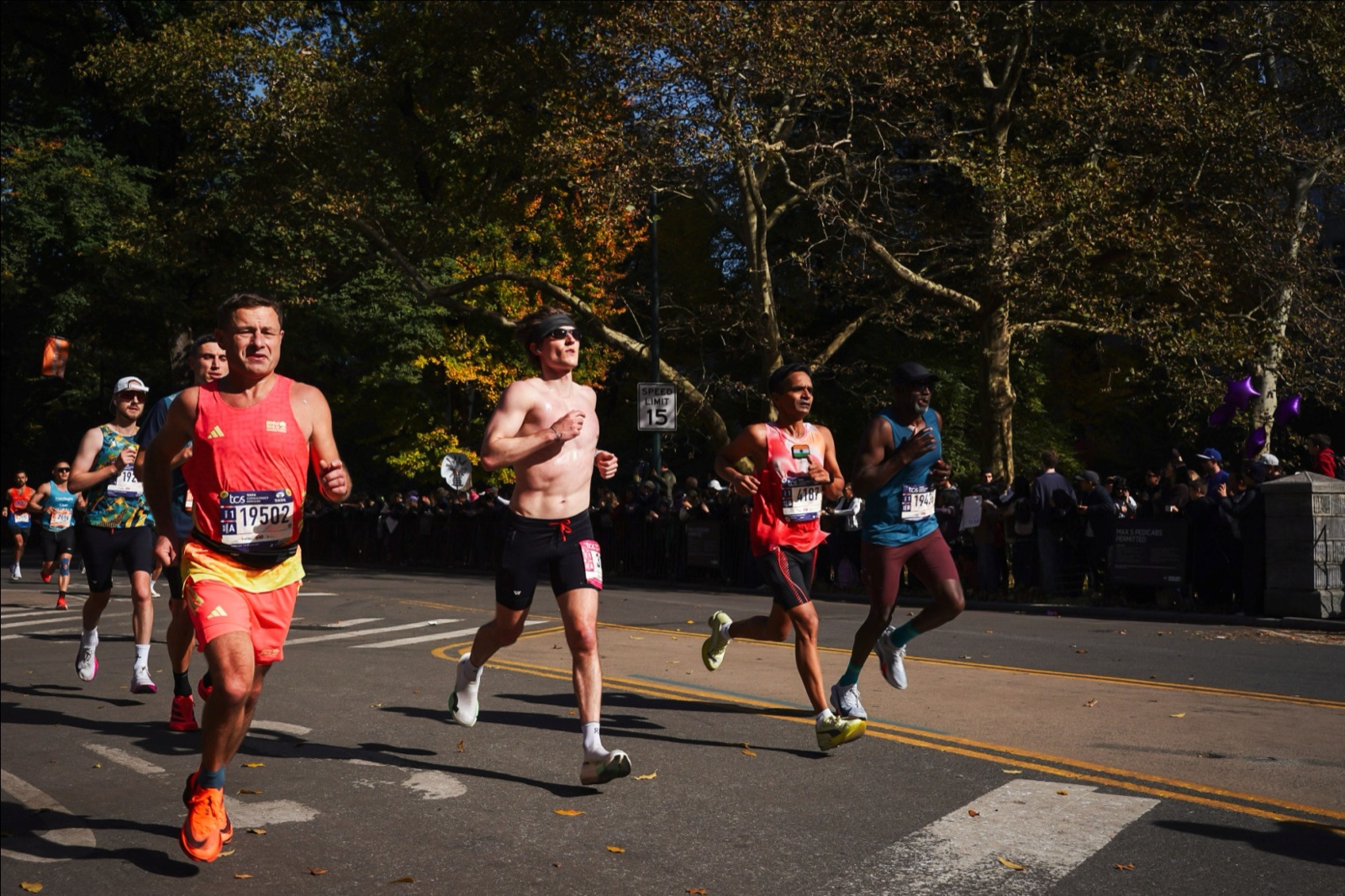
Central Park, in the final kilometres.
After crossing the Madison Avenue Bridge, the route took us down Fifth Avenue towards Central Park. This was the final major challenge before the finish. I had run the Central Park previous day, so I had a fair idea of the terrain. I knew the final section would continue to roll and that the finish was not going to be easy. By this point, fatigue was building. As I entered Central Park, I kept reminding myself that the finish line was getting closer. I focused on maintaining my effort, pushing through the discomfort and giving everything I had left. I kept pushing, stayed focused and finally crossed the finish line.
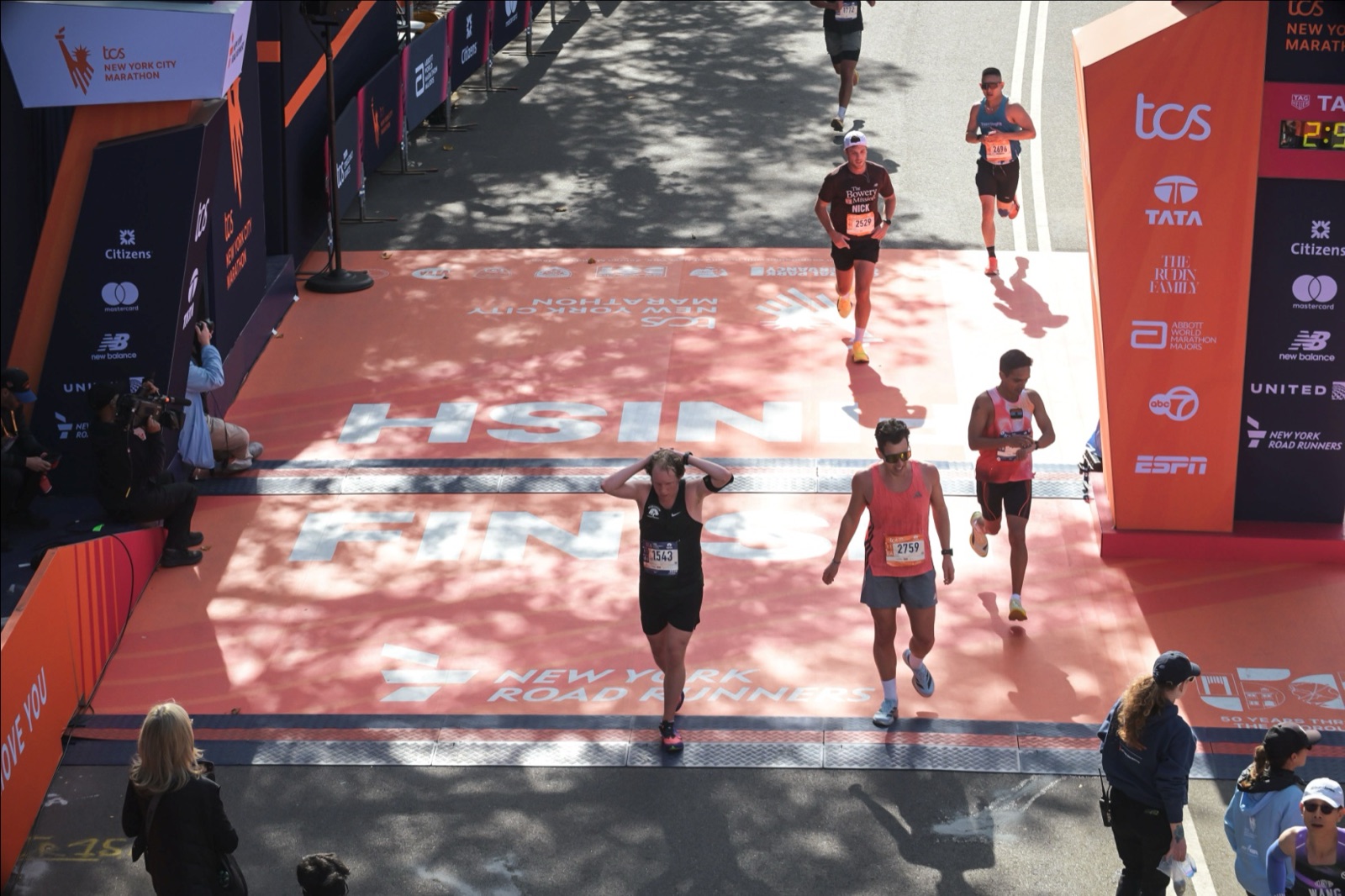
The finish line in Central Park.
2:57:36.
Ten sub-3 marathons.
And finally, my first sub-3 finish at a World Marathon Major.
Pacing snapshot from the recorded kilometre splits:
| Section | Recorded Pace / Splits | Course and Race Notes |
|---|---|---|
| Km 1–3 | 4:59, 3:51, 3:49 | Opening climb on the Verrazzano-Narrows Bridge, followed by two downhill kilometres |
| Km 4–23 | Mostly 4:02–4:12/km | Rolling terrain; settled into a steady rhythm |
| Km 24–26 | 4:23, 4:18, 4:02 | Two uphill kilometres (+12 m and +26 m), followed by a descent |
| Km 27–33 | Mostly 4:01–4:14/km | Regained rhythm through another rolling section |
| Km 34–37 | 4:20, 4:23, 4:20, 4:16 | Fatigue building in the later stages |
| Km 38–39 | 4:38, 4:26 | Late climbs (+22 m and +8 m) |
| Km 40–42 + final 0.5 km | 4:17, 4:18, 4:11; final 0.5 km at 4:00/km | Kept pushing and finished strongly |
Crossing the finish line was a very emotional experience.
I had worked towards this goal for years.
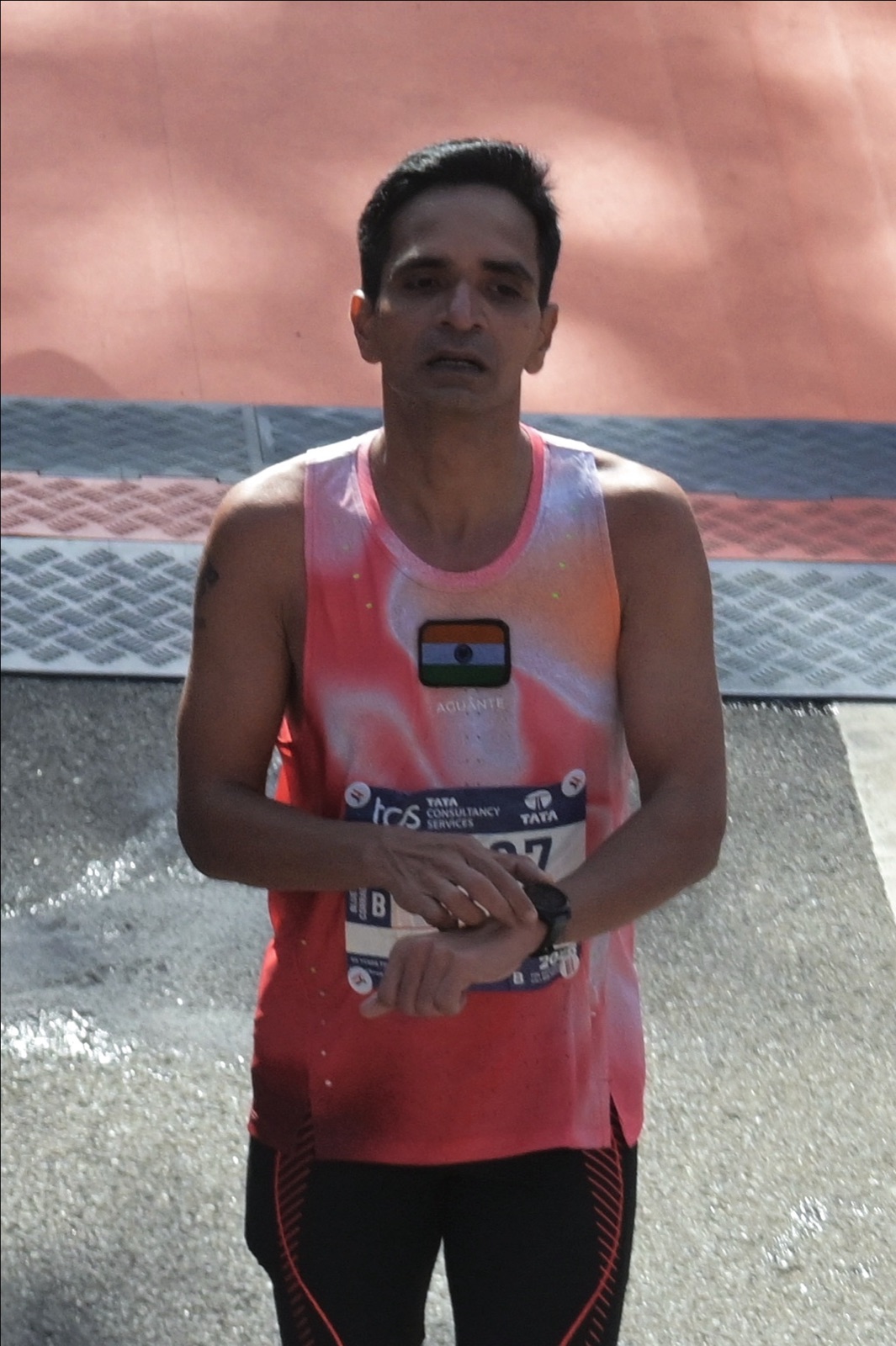
Achieved.
After crossing the finish line, I collected my medal and headed towards the medical tent. My hamstrings and calves needed some attention. I also had some hot soup and water before making my way out.
Despite the physical exhaustion, I was overwhelmed with emotion. I actually cried after crossing the finish line.
It was not just about the timing. It was about the years of effort, the sacrifices, the early mornings, the difficult training days and the patience required to keep chasing a goal.
Sometimes, the most meaningful victories are the ones that take the longest to achieve.
The New York Marathon reminded me of a few important lessons:
A journey like this is never achieved alone.
A heartfelt thank you to Coach Jagadish Shinde for his structured training plan, guidance and constant support throughout this journey.
A special thanks to Vijayraghvan, whose experience of running the New York Marathon three times helped me understand the course and plan my race strategy.
Thank you to Purushottam and Pawan for bringing boiled sweet potatoes during race weekend. It was a small gesture, but it meant a lot and helped with my race preparation.
Thanks to Sachin for being part of the race weekend, and to Gauri Jayaram and ACTIVE Holidays for helping make this New York Marathon experience possible.
And finally, thank you to my family, running friends, training partners and everyone who supported me, followed my journey and sent their wishes. Your encouragement means a lot.
Completing ten sub-3 marathons over approximately 12 years is something I will always cherish.
I still have goals to pursue, limits to test and many more miles to run.
Dream big. Stay consistent. Trust the process. Keep moving forward.
New York, you will always be special!

