

Training insights and race strategy of Aravind's 41:27 finish at TCS World 10K 2026

TCS World 10K a regular marker in my race calendar. It is my tenth year running, and every year it brings a slightly different build-up, a different set of doubts, and also a chance to test where my fitness stands at the beginning of the season. This year, while signing up for the race, one big concern: could I put together a meaningful 10K training block with all the lingering fatigue from [New Delhi marathon] ran in February?
Date: 26 April 2026
Start time: 6:10 AM
Race Distance: 10km
Start point: Cubbon Road, Bengaluru
Elevation: 35m ascent
Race Distance: 10km
Goals:
I had barely 6 full weeks to train for, which meant a full 10K racing cycle seemed impractical. Norwegian Singles Method/NSM is something I experimented in the past, but never gave it a full training cycle. Having rolled it out on RunStrong recently, this seemed a great option to try out.
The marathon fatigue from the previous cycle was definitely there in the background. Strength training, which ideally should have had a bigger role, stayed minimal through the cycle.
One of the most interesting thing about NSM is the 5K time trials. I ended up doing three of them, two self-supported efforts and one during the Puma Nitro Run. The first one was a proper reality check. I went out too hard at my previous best pace and blew up. In a way, that failed attempt was useful, got a good estimate where my current fitness stood. The next two time trials went better and gave me more confidence on what paces to target for my 10K.
Plan Structure
Training structure is very simple: 3 sub-threshold sessions a week, with one long run, and rest all are easy. The long run was mostly for recovery and aerobic maintenance, while the sub-threshold sessions were where the real work happened. Here is the full plan for reference.
I also did a route recce. Knowing the terrain in advance always reduces mental noise on race day, and writing the route preview for GeeksOnFeet made me think much more clearly about the race in segments. By race week, I felt I had planned the pacing well. The only lingering worry was the start line crowding given my experience 2 years ago.
Pre-race this time was easy-peasy. The expo was smooth. Attending a few events around the expo, and meeting many running friends, kept the mood relaxed for the race day. Spent some more time in reviewing the pace plan, and now I fully know the paces I wanted to run, where I needed patience, and where I could start racing.
Race morning was simple. The metro ride in added to the mood in the best way. There is something about a metro full of runners that makes the race feel real.
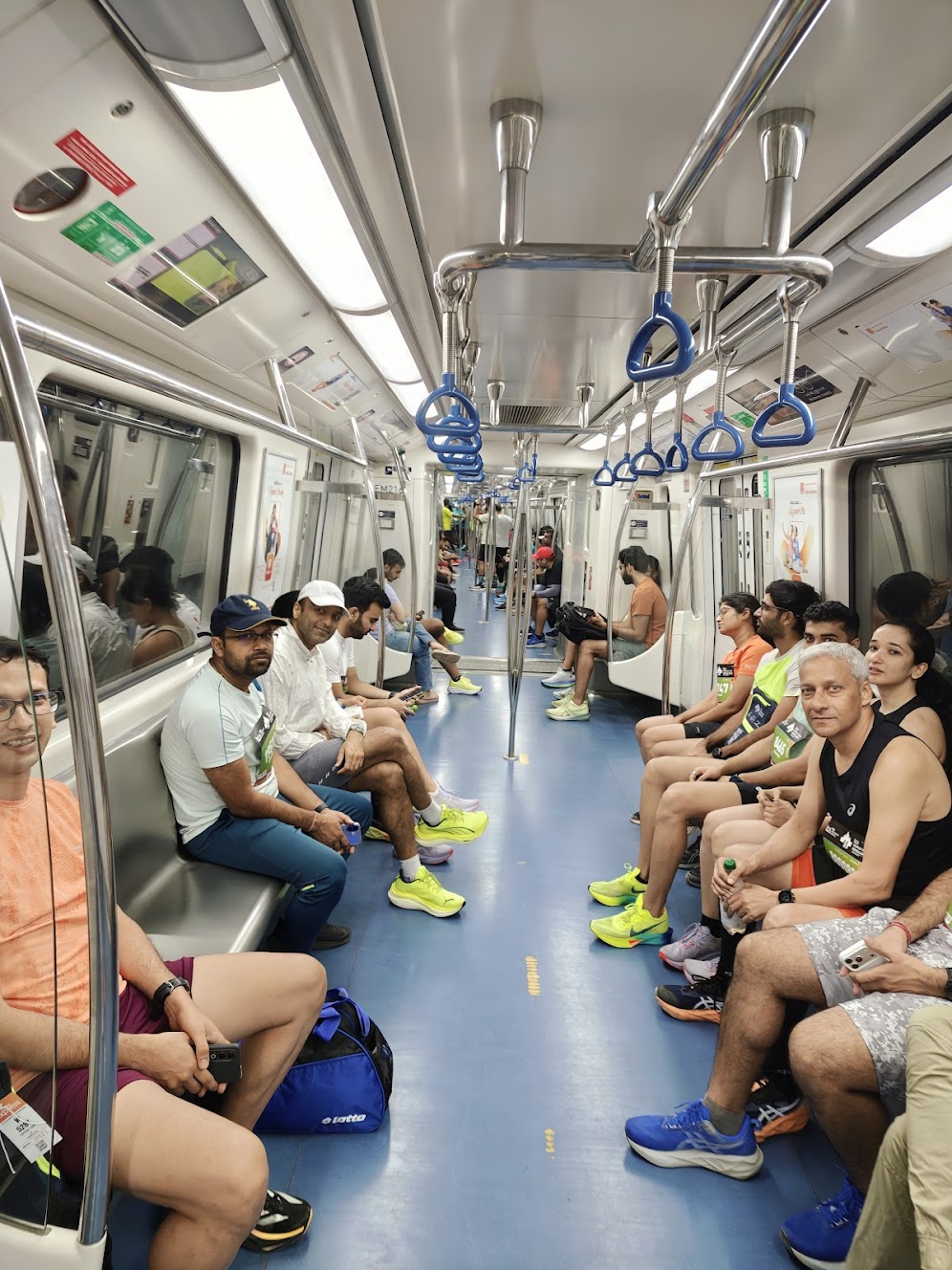
Once at the venue, the familiar challenge showed up immediately. The assembly area and start lines were crowded, and there was hardly any room to warm up properly. There is not even any water around. Had to borrow a few sips of water at the startline, so that I could have my caffeine gel, 10 minutes before the start.
The first kilometer turned out to be the slowest, exactly as I had feared. Even though the opening stretch is wide on paper, the crowd and the sharp turns made it impossible to run naturally. I figured the smartest thing to do was stay patient and not burn energy fighting the crowds.
The second kilometer was a little better, and I finally got some space to move. But the third kilometer slowed again because of narrow stretch as you go into Kensington road, which was frustrating.
The fourth kilometer was really when I found my rhythm. That was the point where the race finally began to feel like a race rather than an obstacle course. I could settle into effort and run with some flow.
The fifth kilometer is where the course starts asking the right questions. It is a hilly section, and I just wanted to stay controlled and keep the effort honest without letting the climb dictate the race. The sixth kilometer is also a gradual drag, but I came into that stretch feeling quite strong. Seeing the crowds there was refreshing. I soaked in the noise a bit, and mentally prepared for the final four kilometers.
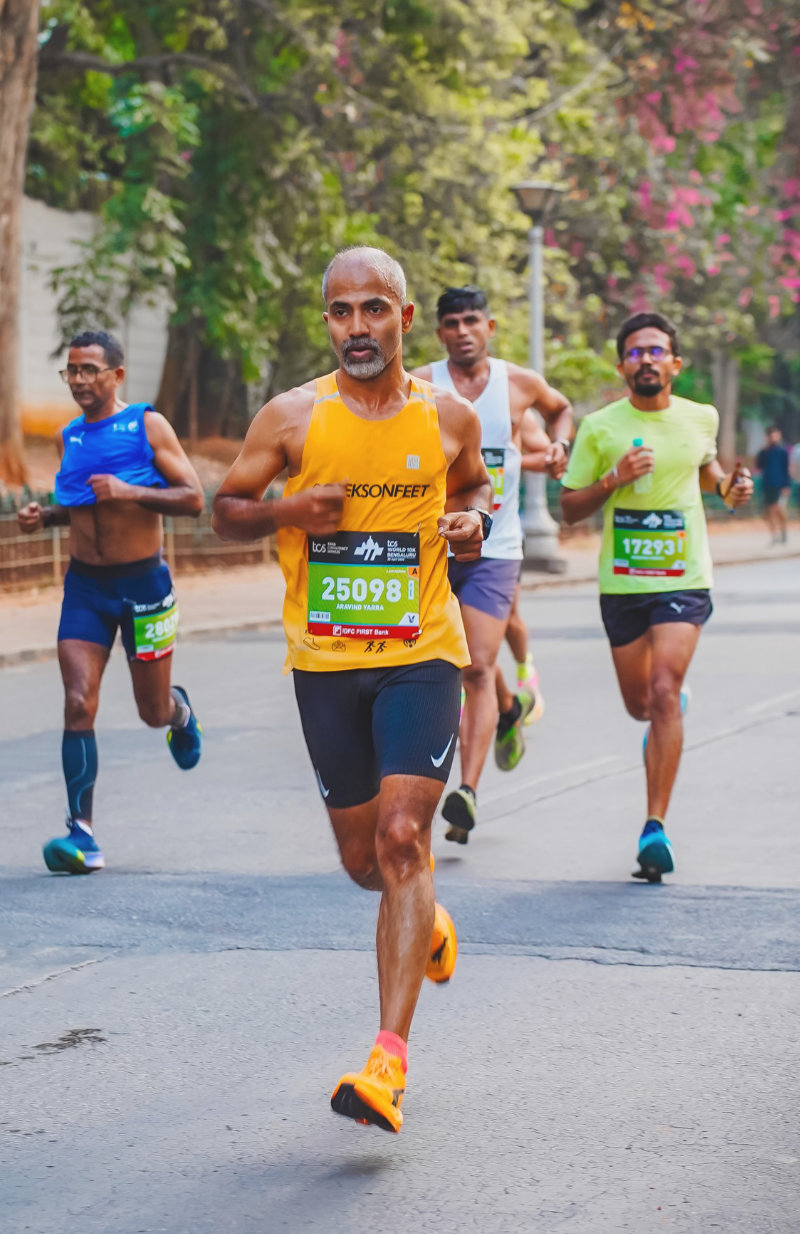
From there on, I kept moving through the field and passing runners steadily. That is one of the most satisfying feelings in a well-paced 10K. You are not reacting to the race, you are racing it.
The eighth kilometer was where I finally went full throttle. This was probably the clearest moment where the Norwegian-style training showed up for me. That stretch felt very similar to the last of the 12-minute threshold blocks I must have done at least ten times during this cycle. It was a familiar kind of discomfort. Not pleasant, of course, but recognizable. I knew how to sit with it and keep pressing. On race day, though, it came with more adrenaline and better mindset.
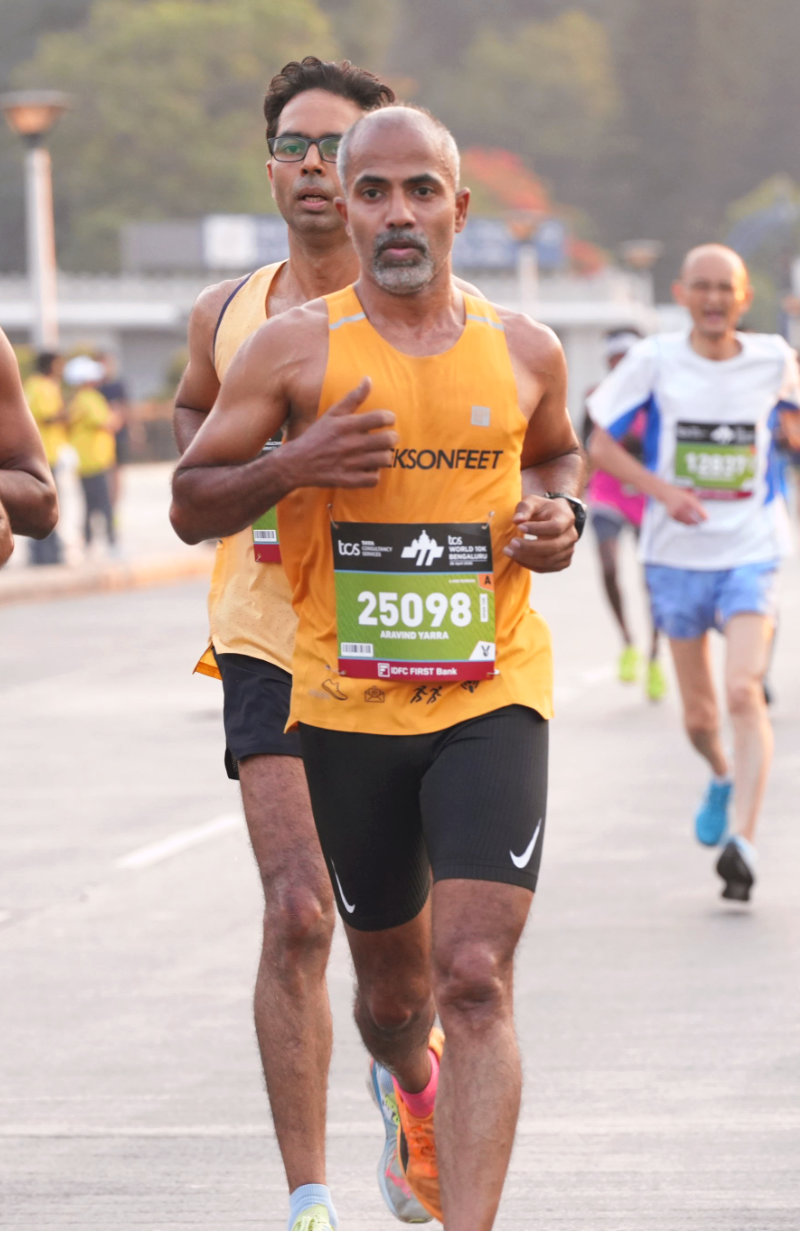
The Bengaluru crowds were awesome in this part of the race. People calling out my name somehow made the effort feel lighter, or at least less lonely. It is hard to explain, but those little moments can carry you through tough sections better than any split on the watch.
By the last two kilometers, fatigue was building, and my form was beginning to fray. But took advantage of the downhill section on Queens Road and continued the momentum despite slight elevation in the ninth kilometer. As I approached the final kilometer, I am pretty sure I recruited every muscle I could to push the pedal as hard as possible. Closing with a 3:53 final kilometer and finishing in 41:27 is something I would not have imagined in a 10K a year ago, and that made the finish especially satisfying.
The biggest takeaway from this cycle is that the Norwegian Singles method, while I was never fully convinced by it at first, seems to quite effective. More than anything, it gave me a better feel for controlled discomfort and how to stay strong late in the race. That showed up very clearly in the final part of the 10K. The specificity of the workouts, the time trials, and the pacing awareness all added up well.
I plan to continue with this NSM for now and build on what this training cycle taught me. I also want to include a few more 5K races along the way, both as checkpoints and as a way to keep sharpening that top-end speed.
Mid-june, the focus shifts toward a more conventional half marathon block leading into the Delhi Half Marathon.
Along the way, half-marathon at Hyderabad will likely serve as a baseline race, and Bengaluru half-marathon as a tune-up. That should make for a good mix: a little more speed in the short term, then a proper half marathon build with enough race practice to keep things honest.

